Johann Schriver genannt Springorum

Johann Schriver, genannt Springorum, was a late-15th/early-16th-century civic leader in Bochum (now in North-Rhine Westphalia, Germany). He was born into a prominent local family: his mother, Nese Springorum, was a daughter of Johann Springorum the Elder, a Bürgermeister of Bochum in the late 1400s, and his father was Johann Schriver, a judge in Essen. Through this maternal connection he inherited the Springorum name, which by his generation had begun to function as a stable family identifier in local records.
By the early 1500s Johann Schriver genannt Springorum himself had risen to the highest civic office in Bochum, serving as Bürgermeister (mayor) roughly between 1510 and 1517. In that capacity he appears repeatedly in municipal charters and legal documents, and is recorded as a vassal in local feoffment transactions involving land around Bochum.
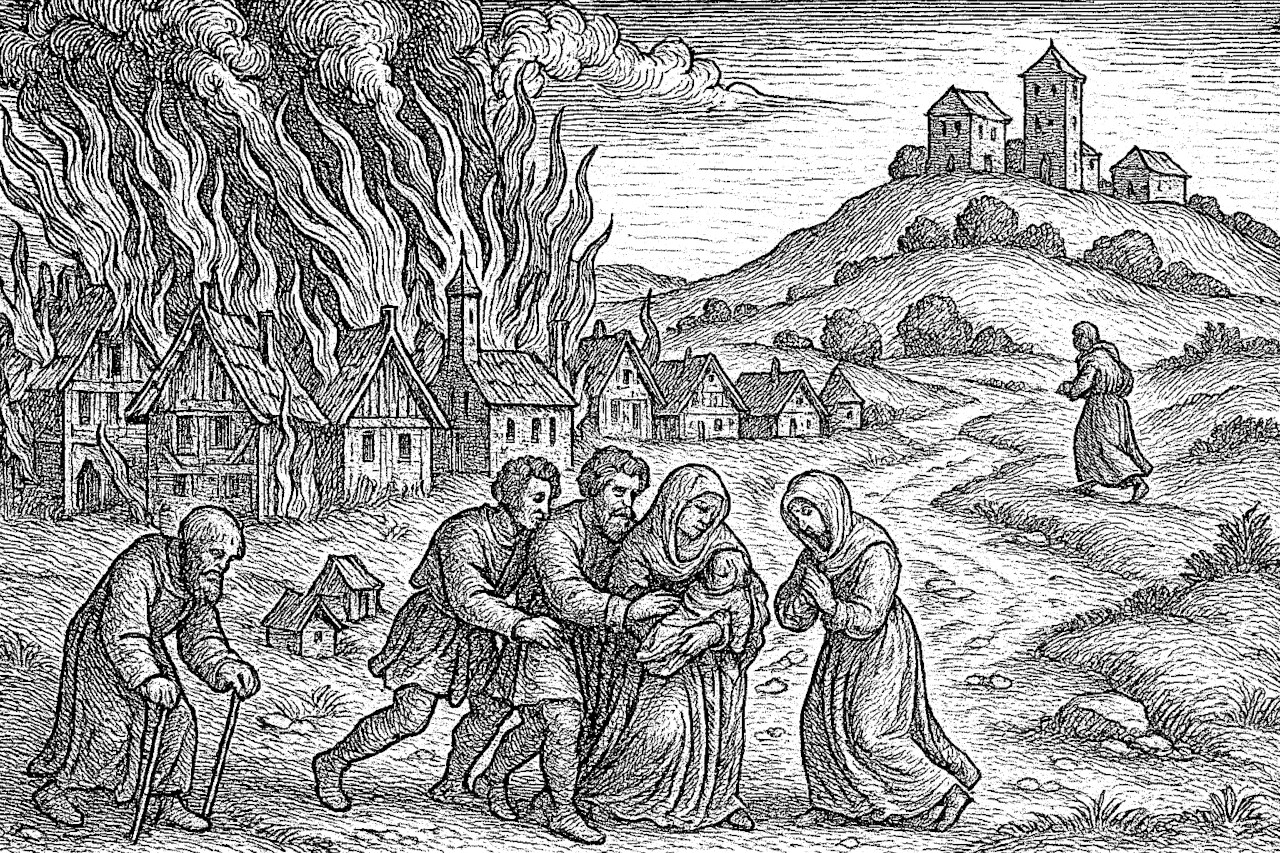
His tenure as mayor was marked by both prominence and turmoil: in 1517 a major fire broke out in Bochum, allegedly starting in his own house. The blaze devastated much of the town’s buildings and records, and as a consequence Schriver was briefly banished and lived in exile in Blankenstein. However, a few years later he and his family were formally reconciled with the town, restoring their legal and property rights. Johann Schriver’s life thus reflects both the local influence of the Springorum family at the dawn of the early modern period and the fragility of urban life in late-medieval Germany.
Events & References
Enfeoffment of the Norderhof in Hunthamme
10 January 1494 · Hunthamme, Gericht Bochum, Deutschland
On January 10, 1494, Johann Schriver of Bochum, son of the late Johann Schriver, declares that Abbot Anton has enfeoffed him with the Norderhof estate in Hunthamme, within the jurisdiction of Bochum, under the right of service (Dienstmannsrecht). He paid homage in the presence of witnesses Heinrich tem Putte, Jaspar Gummersbach, and Eberhard Wittenhorst. The document is sealed by Hermann Hoppenbrouwer, the judge of Bochum, and was issued on the Friday after the Feast of the Epiphany.
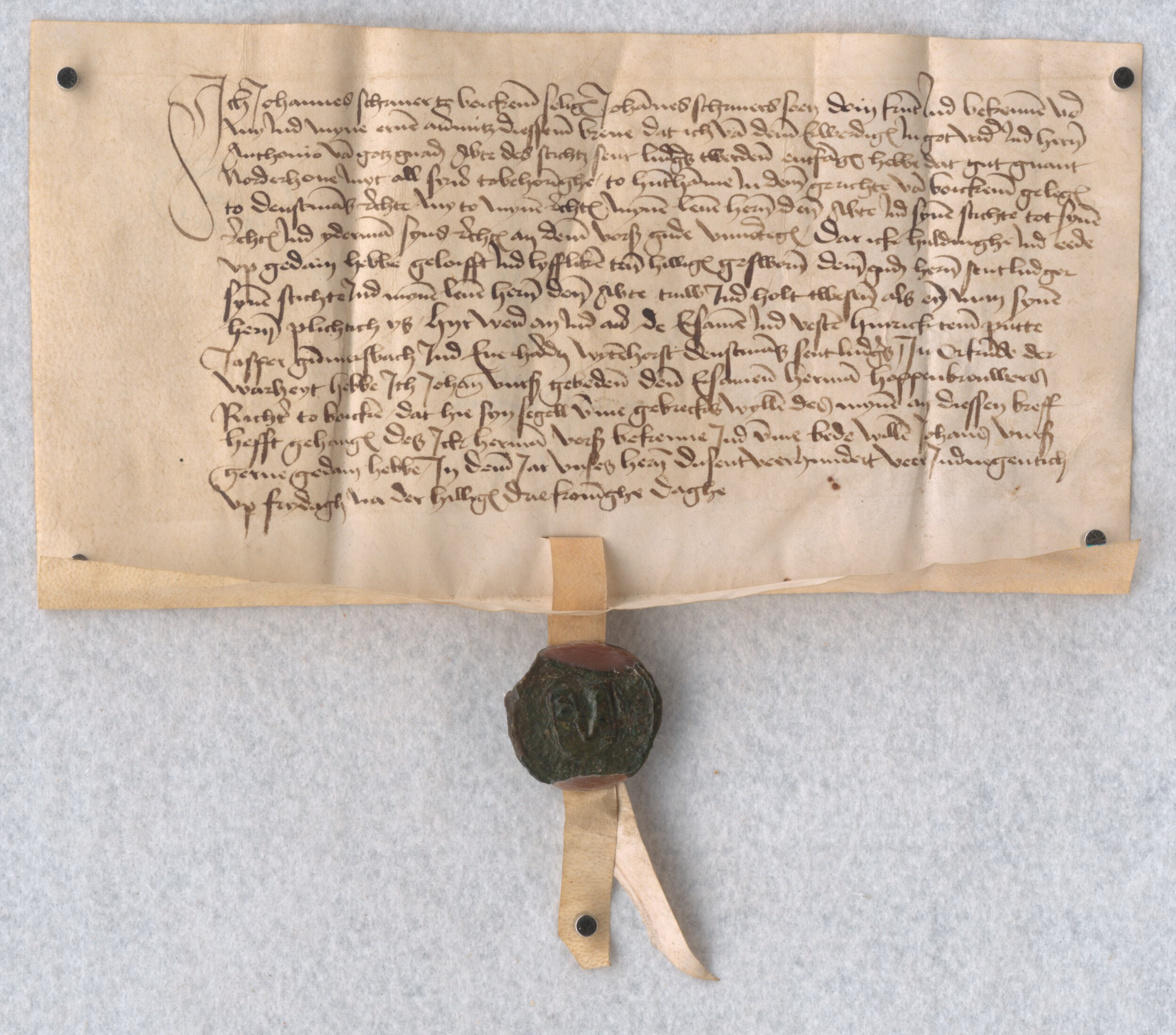
Reference: Enfeoffment of the Norderhof in Hunthamme
Johann Schriver genannt Springorum, Bürgermeister of Bochum
1510 · Bochum, Deutschland
This nineteenth-century historical study by Franz Darpe documents the civic administration of medieval Bochum through municipal charters and parish records, including a chronological list of the town’s mayors. Within this overview, Johann Schriver, known as genannt Springorum, is identified as serving as Bürgermeister of Bochum between 1510 and 1517. His use of the Springorum name alongside his occupational surname reflects the continued prominence of the Springorum family and provides clear evidence of their lasting role in Bochum’s municipal government into the early sixteenth century.
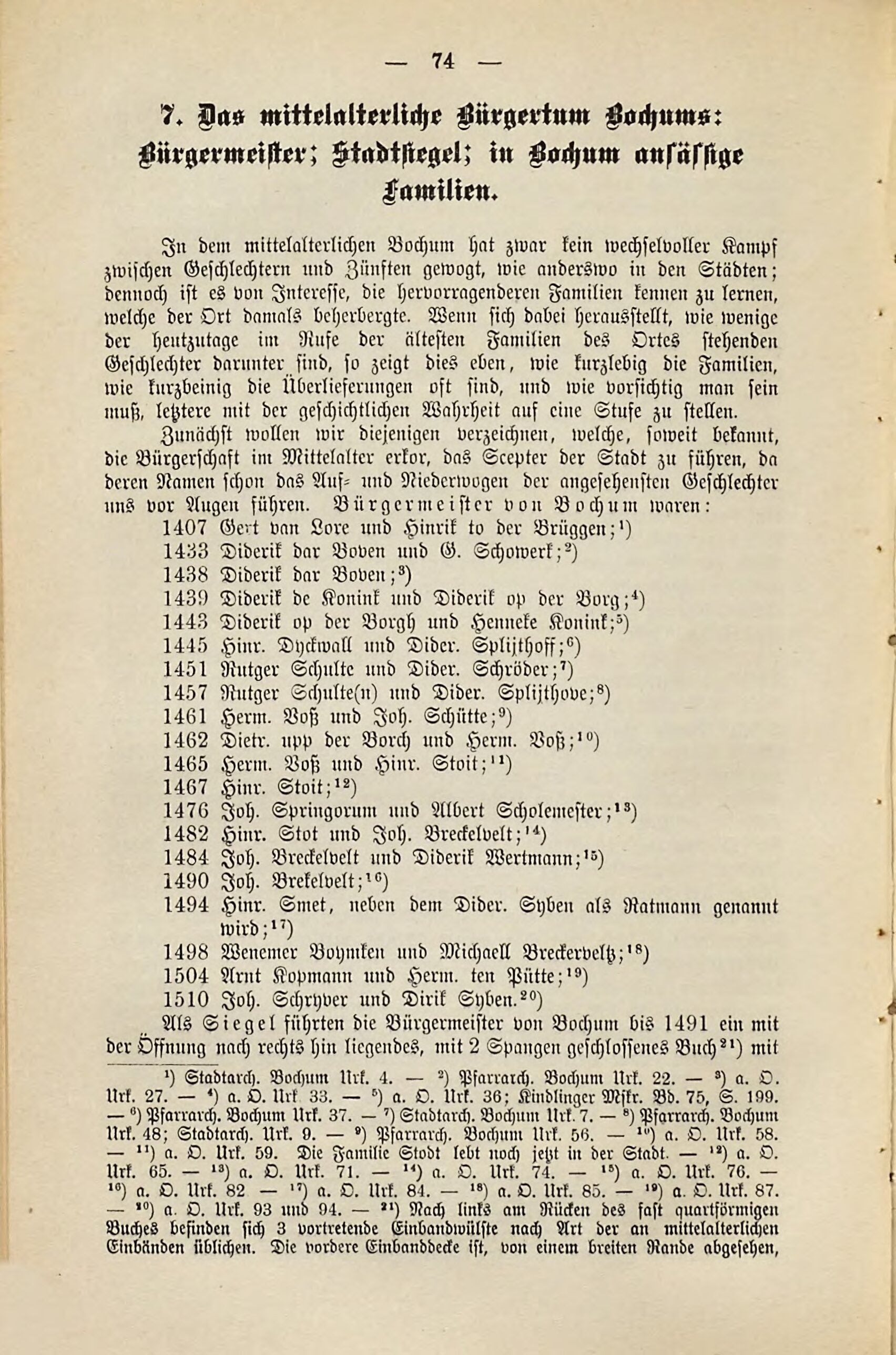
Reference: Johann Schriver genannt Springorum, Bürgermeister of Bochum
Feoffment of Springorum
21 July 1513 · Bochum, Kirchspiel Bochum, Deutschland
Before Abbot Anton, Johann Schriver from Bochum, also called Springorum, showed an official charter. It said that Anna von Eickel—first the wife of Detmar Berswort and now married to Springorum—had given up the estate of Rodensel near Bochum. She had originally received this land from her first husband as a wedding gift.
At her request, Abbot Anton then officially gave this land to Springorum to hold as a fief. Springorum promised loyalty to the abbot. Gottfried Garthaus and Heinrich Dunwald were present as witnesses.
Reference: Feoffment of Springorum
The Bochum Town Fire of 1517
25 April 1517 · Bochum, County of Mark
On St. Mark’s Day in 1517, a devastating fire destroyed large parts of the town of Bochum. Later records report that the fire originated accidentally in the house of Johann Schriver genannt Springorum, who was serving as Bürgermeister of Bochum at the time. From there, the flames spread rapidly through the densely built town, causing widespread destruction of homes, public buildings, and written records.
In the immediate aftermath, Johann Schriver genannt Springorum was held responsible for the accident, banished from Bochum, and forced into exile in Blankenstein. The fire marked a profound rupture in Bochum’s urban and documentary history, with lasting consequences for the survival of earlier records.
Reference: The Bochum Town Fire of 1517
Reconciliation after the Bochum fire
1525 · Bochum, County of Mark
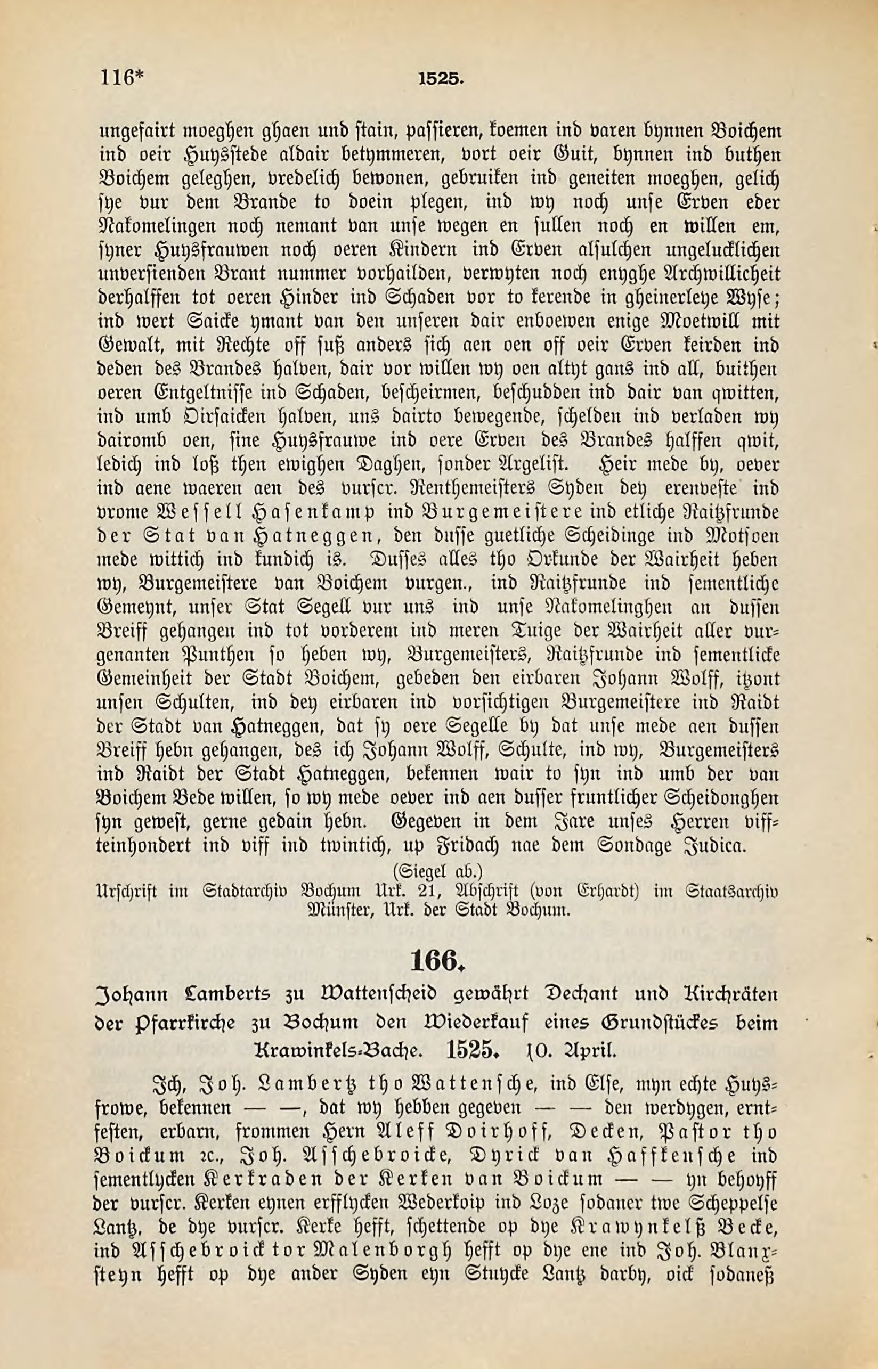
In the years following the fire of 1517 and the banishment of Johann Schriver genannt Springorum, a formal reconciliation was reached between him and the town of Bochum. This charter records the settlement by which Schriver, by then living in exile in Blankenstein as rentmaster, was restored—together with his wife, children, and heirs—to full civic peace.
The agreement granted them freedom of movement, residence, and property rights in and around Bochum, and permanently released them from all further claims, accusations, or reproaches connected to the accidental fire.
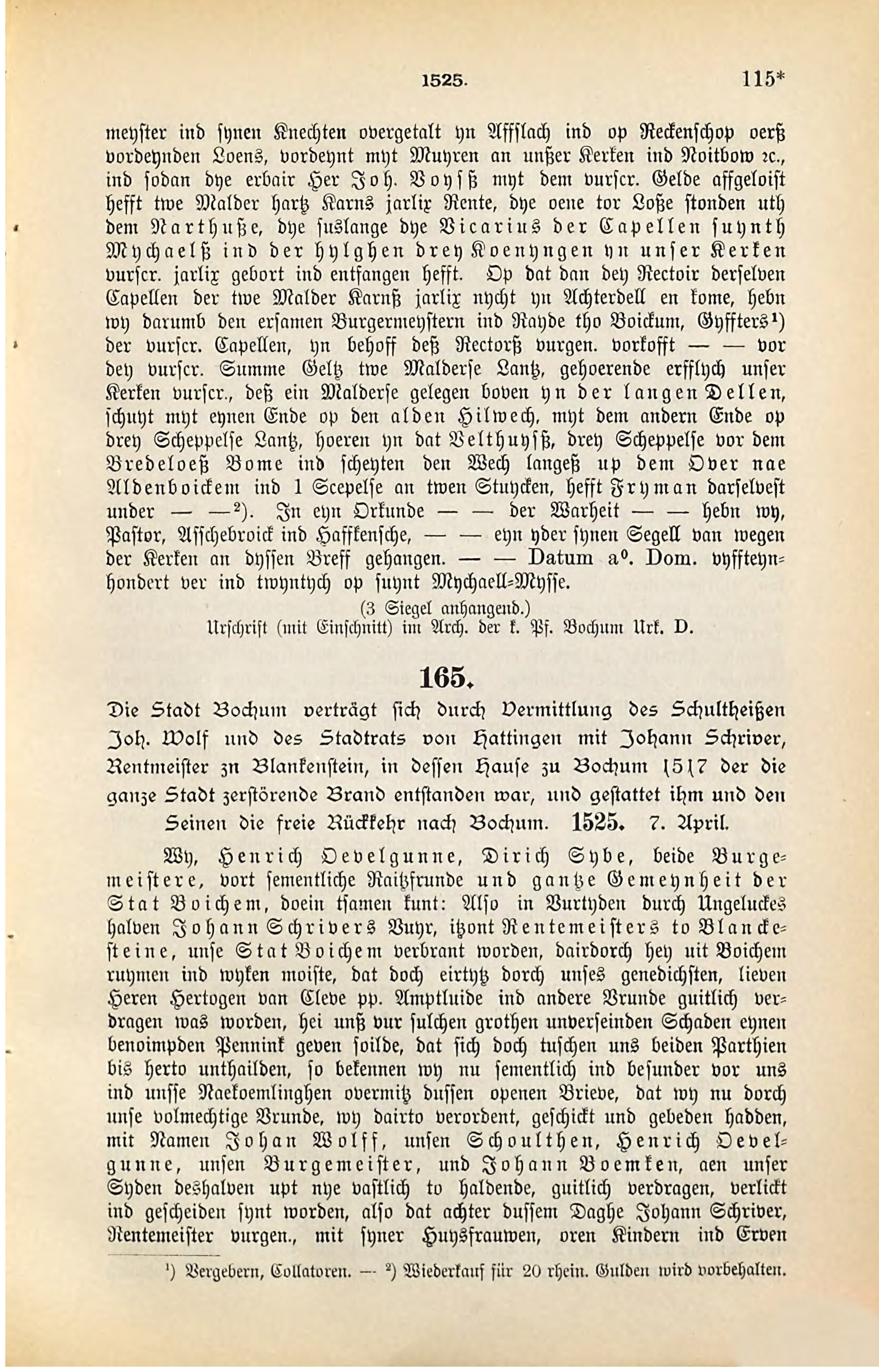
Reference: Reconciliation after the Bochum fire
Enfeoffment of the Norderhof in Hunthamme
27 November 1538 · Hunthamme, Kirchspiel Bochum, Deutschland
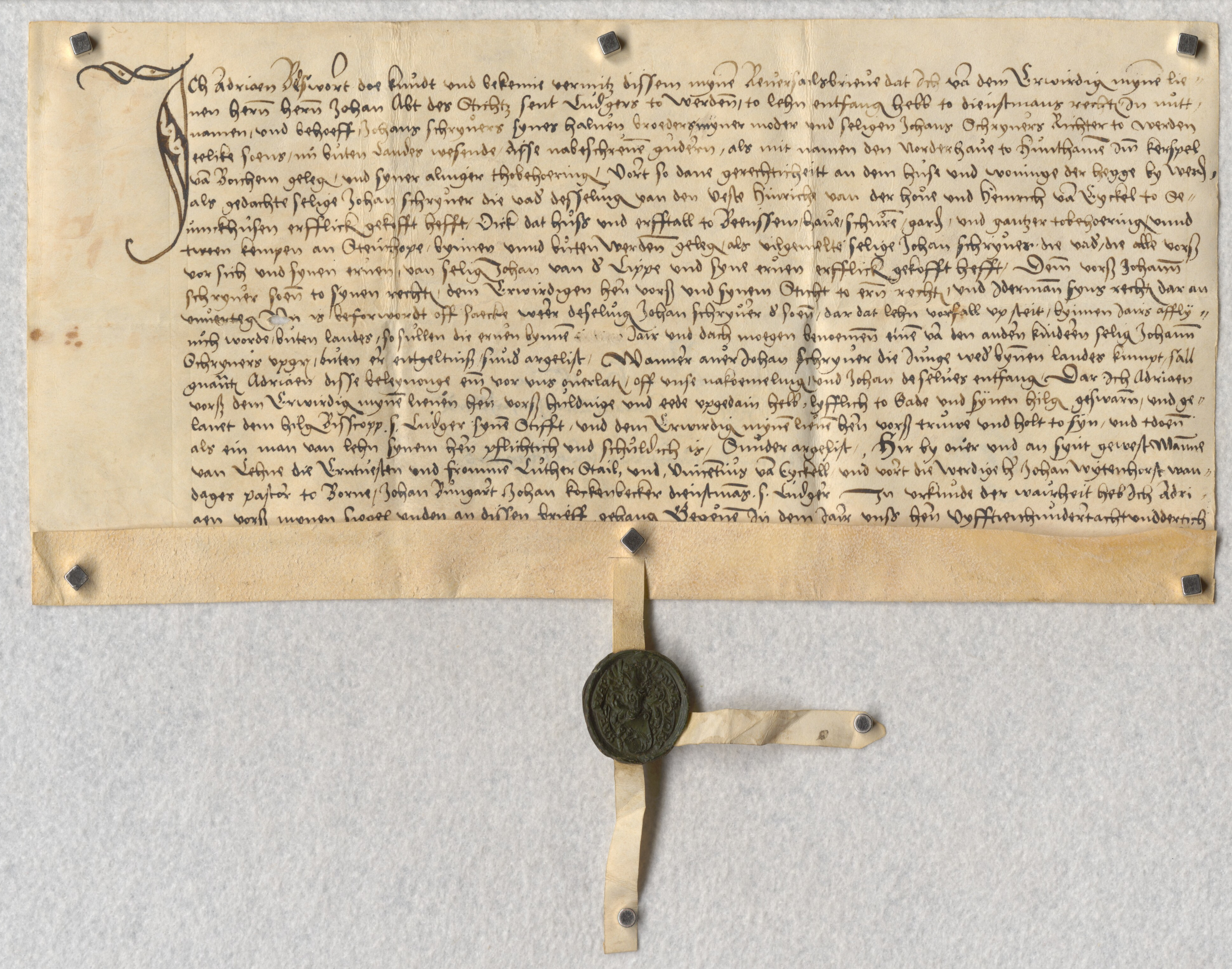
On November 27, 1538, Adrian Berswordt announced that Abbot Johann had enfeoffed him with several properties on behalf of his half-brother Johann Schriver, who was abroad at the time. These properties included the Norderhof in Hunthamme (parish of Bochum), the Haus Hegge near Werden, and the Haus zu Beenssem with its associated lands and gardens. Adrian Berswordt paid homage in the presence of notable witnesses, including Lutter Stael, Vinzenz von Eickel, and former pastor Johann Wittenhorst. The charter was sealed by Adrian Berswordt and marks a significant record of property transfer and feudal obligations in the region.
Reference: Enfeoffment of the Norderhof in Hunthamme
Family
Parents
- ♂ Johann Schriver II (c. 1418 – ?)
- ♀ Nese Springorum (c. 1445 – ?)
Partner(s) & Children
Anna von Eickel (c. 1480 – ?)
- ♂ Johann Springorum I (c. 1505 – c. 1560)