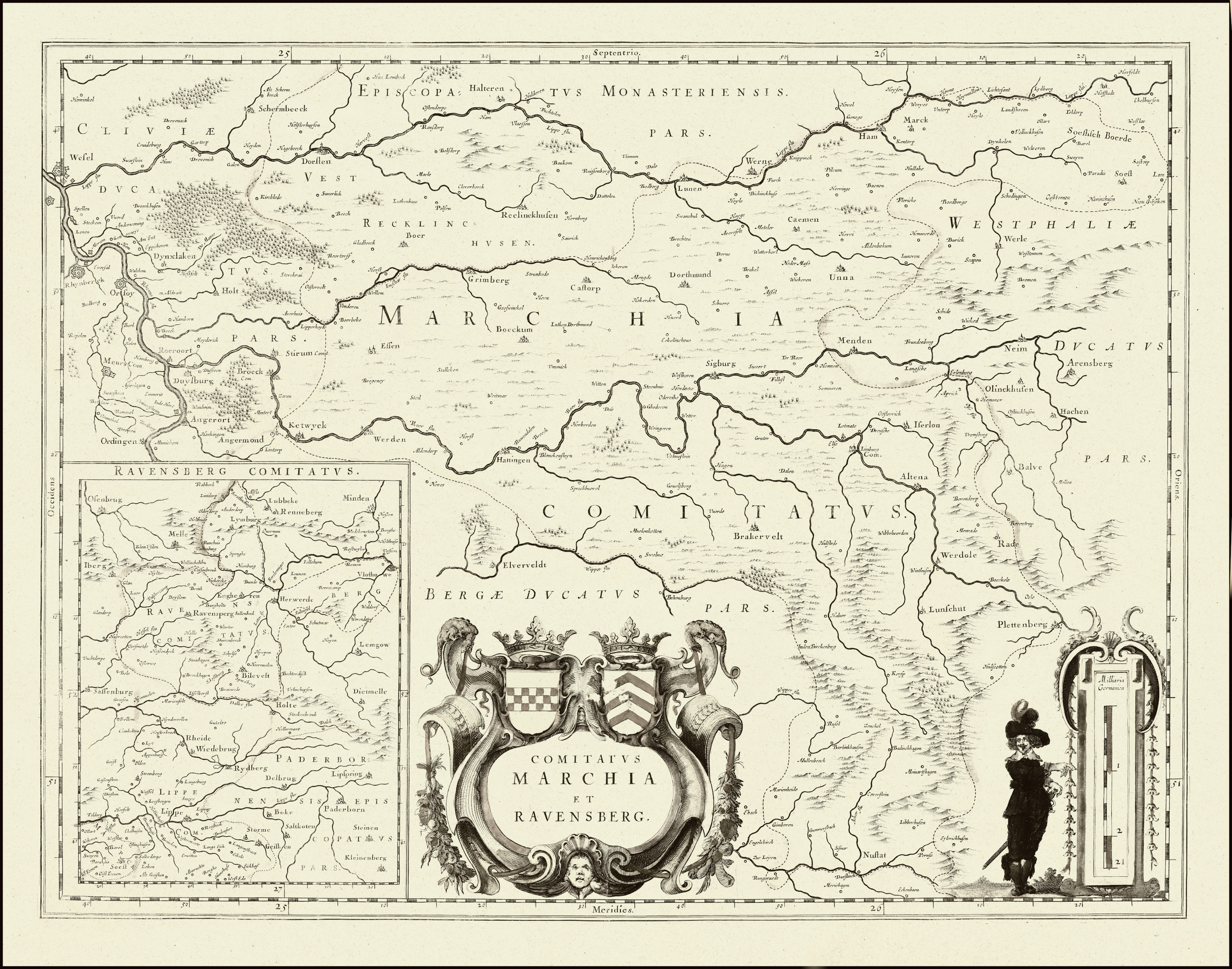
Comitatus Marchia et Ravensberg
A Glimpse into the Past: The Blaeu Family’s Masterpiece
Imagine holding a map that’s not just a tool, but a work of art. That’s exactly what the Comitatus Marchia et Ravensberg map is. Published in 1645 by Joan Blaeu, it’s a shining example of the Dutch Golden Age of cartography. Part of the famous Theatrum Orbis Terrarum, sive Atlas Novus, this map is more than just lines and labels—it’s a blend of precision, creativity, and ambition.
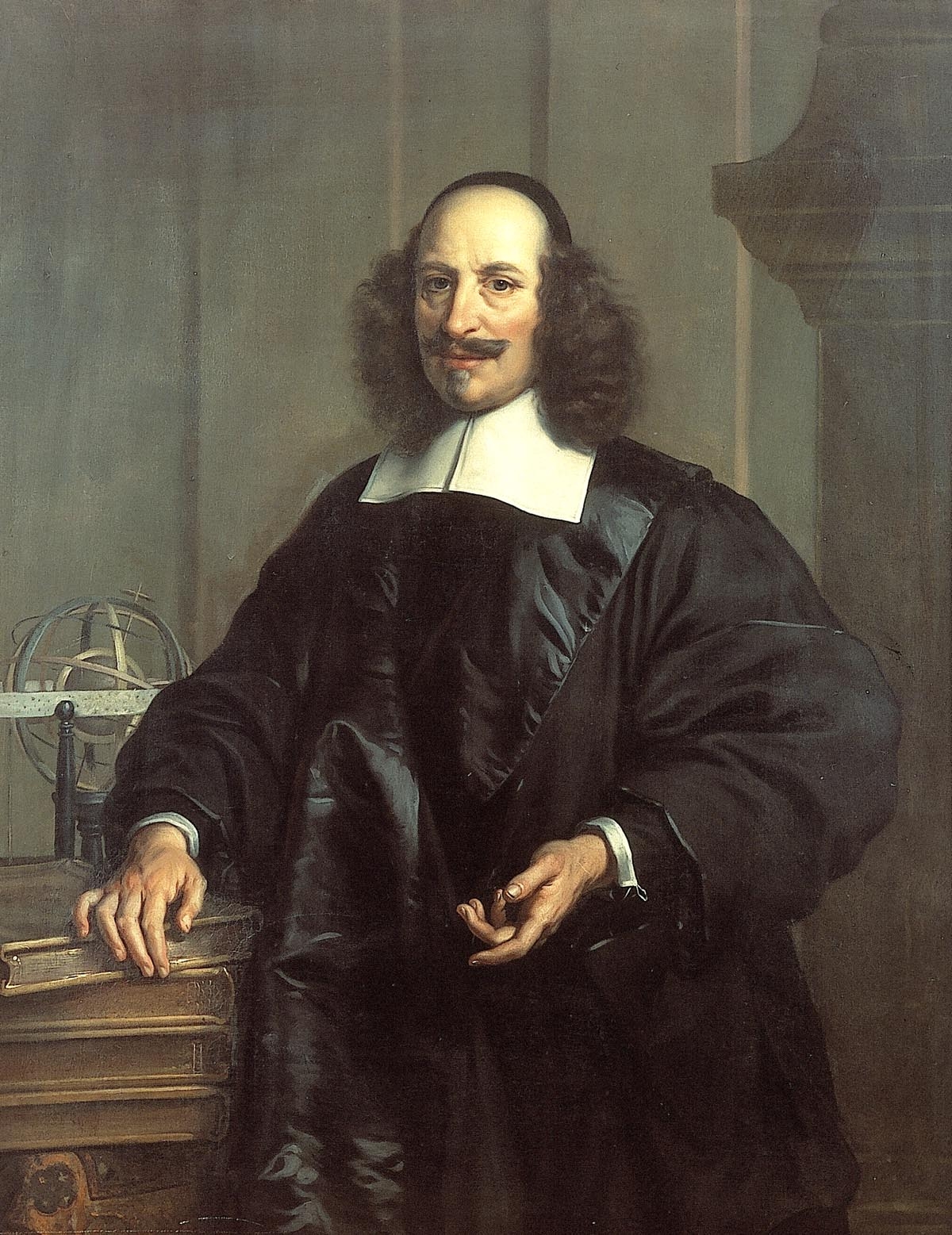
The Blaeu family, including Joan and his son Joan II were the rock stars of mapmaking in the 17th century. Their maps weren’t just practical; they were beautiful, combining scientific accuracy with decorative flair. People didn’t just use them—they admired them, collected them, and saw them as symbols of the Dutch Republic’s cultural and intellectual boom.
This particular map zooms in on the historical counties of Mark and Ravensberg, areas that today are part of North Rhine-Westphalia in Germany. It’s packed with details: towns, rivers, forests, and borders, giving us a vivid picture of the landscape and political scene of the time. The Blaeu family didn’t stop at just the basics, though. They added coats of arms, ships, and little landscape scenes, turning the map into a visual story. These touches weren’t just for show—they highlighted the prestige of the regions and the people who commissioned the maps, reflecting the political and economic ambitions of the era.
But there’s more to this map than meets the eye. It was created during the Thirty Years’ War, a brutal conflict that reshaped Central Europe. The counties of Mark and Ravensberg were right in the middle of it all—caught up in religious battles, land disputes, and ever-changing alliances. This map isn’t just a geographical record; it’s a snapshot of a turbulent time, showing how cartography was deeply connected to the politics and society of the day.
What makes this map even more special is its lasting legacy. The Blaeu family’s atlases were famous far and wide, inspiring mapmakers and scholars for generations. Today, the Comitatus Marchia et Ravensberg map is still a treasure trove for historians, geographers, and art lovers. It gives us a window into the past, showing how people back then saw and understood their world.
So, when you look at this map, you’re not just seeing a piece of paper—you’re connecting with history. It’s a reminder of how the past shapes our present, and how something as simple as a map can tell a story that spans centuries. What do you think this map would have meant to someone living in that time? How would they have used it, and what stories might it have told them?
- Title: Comitatus Marchia et Ravensberg
- Author: Johannes Willemszoon Blaeu
- Date: 1645
- Links:
- Download: Full Image 38MB (12660 x 9958 pix)