De Spion under Captain Jan Olhof
Offensive Privateering in the Fourth Anglo-Dutch War
War at Sea and the Turn to Privateering
In December 1780, Great Britain declared war on the Dutch Republic in response to Dutch support for the American War of Independence. The resulting conflict, known as the Fourth Anglo-Dutch War, quickly exposed the weakness of the Dutch navy. In the first months alone, hundreds of Dutch merchant vessels were captured in European and West Indian waters. The regular fleet was unable to protect trade routes, let alone challenge British naval dominance.
To compensate for this failure, the States General relied heavily on private initiative. Prince William V, as stadholder and admiral-general, was authorized to issue privateering commissions. These commissions allowed private shipowners to arm vessels, recruit crews, and conduct offensive operations against enemy shipping for profit. The strategic idea behind this system was that economic warfare through privateering could weaken Britain more effectively than defensive convoy protection alone.
Within this framework, privateering was not a marginal activity but a deliberate extension of state warfare. Ships operating under commission were expected to seek out enemy vessels proactively, not merely defend themselves. This created space for wealthy merchants to become direct participants in offensive naval warfare.
The Privateering Company of Jan Messchert van Vollenhoven
One of the Amsterdam-based privateering companies formed during the war was directed by Jan Messchert van Vollenhoven, together with Matthijs Ooster and Jan Nicolaas van Eys. All three belonged to the economic elite of the city and held prominent positions in trade and public administration. Their company equipped three armed vessels between 1781 and 1782: De Dolfijn, De Triton, and De Spion.
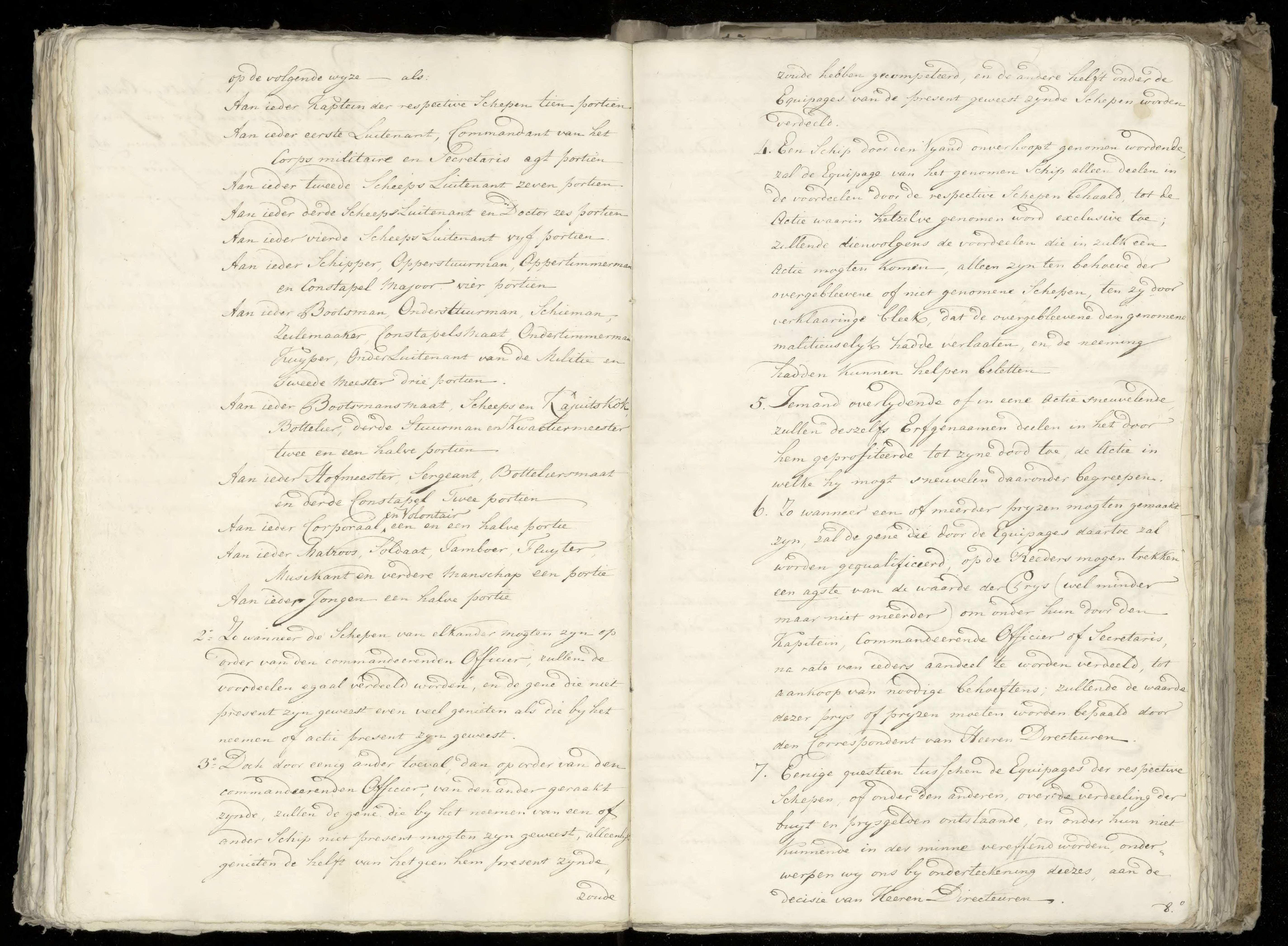
The venture was financed through a share-based fund, with private investors contributing capital for the outfitting of the ships. Crews were recruited in Amsterdam, and detailed contracts regulated the distribution of prize money between owners and sailors. Half of all net proceeds went to the owners, while the other half was divided among the crews according to rank. A portion of the profits was also reserved for sailors injured in action.
Initially, all three ships sailed together on joint cruises. In September 1781, they captured two small British merchant vessels near the English coast. Although the operation demonstrated coordination and combat capability, the prizes were modest, and continued British naval superiority soon limited further success. As a result, De Dolfijn and De Triton were eventually reduced to merchant service under letters of marque, where rising costs and delays made them unprofitable.
De Spion under Captain Jan Olhof
Unlike its sister ships, De Spion remained fully committed to privateering. In 1782 it received two new privateering commissions and resumed offensive operations under the command of Captain Jan Olhof. Under his leadership, De Spion proved far more successful than the other vessels in the company.
During that year, Olhof captured four British ships: The Elbe, The Fisher, The Expedition, and The Jenny. These vessels were mainly engaged in the coal and timber trade, and their capture represented both direct financial gain and disruption of British supply lines. The prizes were brought in, condemned as lawful by the Admiralty, and sold at auction, yielding substantially higher returns than earlier captures.
The effectiveness of De Spion made it the most productive ship in the privateering company. The majority of the total income generated by all six prizes taken during the war can be attributed to Olhof’s command. His actions demonstrate how a relatively small, privately owned vessel could function as an efficient offensive weapon when decisively employed.
However, this success also attracted diplomatic complications. The Danish government protested that De Spion had violated neutral waters near Helgoland and accused Olhof of capturing The Jenny close to the Danish coast and even bombarding the island. Olhof formally denied these accusations, supported by sworn statements from his crew. Although political pressure mounted, the Admiralty ultimately ruled in early 1784 that the prize had been lawfully taken.
Despite this legal vindication, De Spion was sold later in 1782, largely as a result of diplomatic tensions rather than operational failure.
Profit, Principle, and Offensive Warfare
Altogether, the six British vessels captured by the three privateers yielded nearly 24,000 guilders, half of which went to the owners of the company. The share earned by each director represented a substantial return, comparable to tens of thousands of euros in modern purchasing power. Although the historical record is silent on the number of prisoners taken or the value of the cargoes themselves, the financial outcome confirms that privateering could be a profitable and effective form of warfare.
More significantly, the case of De Spion highlights a broader moral and ideological shift. Jan Messchert van Vollenhoven was a leading member of a Mennonite congregation, a tradition historically committed to nonviolence. Yet neither his privateering activities nor the explicitly offensive role of De Spion provoked protest within his religious community. This reflects a wider erosion of the principle of nonviolence among Dutch Mennonites long before the Patriot movement of the 1780s.
The sustained offensive actions of De Spion under Captain Olhof therefore illustrate not only the practical importance of privateering during the Fourth Anglo-Dutch War, but also the normalization of offensive warfare among groups that had once rejected it on principled grounds.
References
2 August 1781 · Amsterdam, NederlandContract distribution of prize money
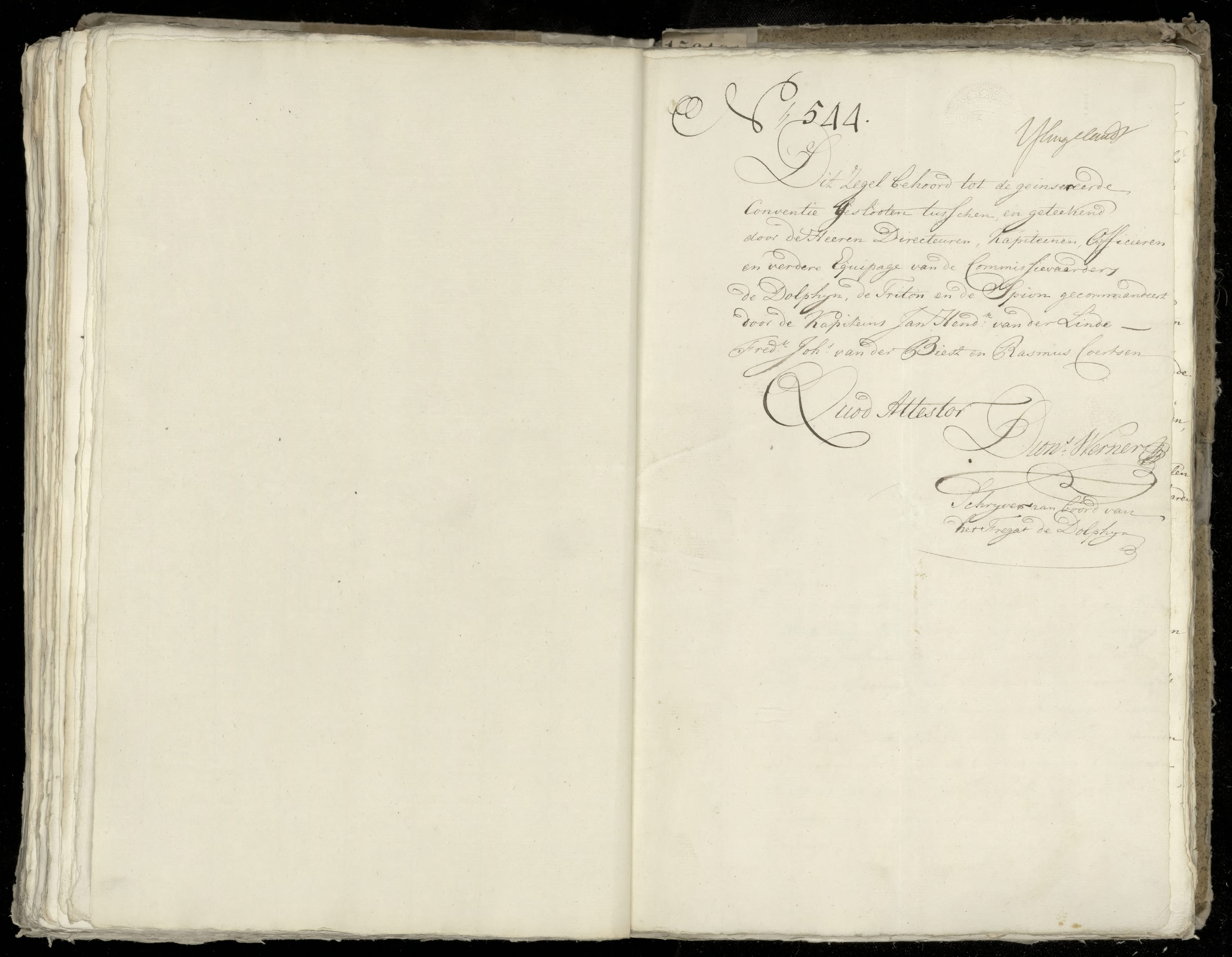
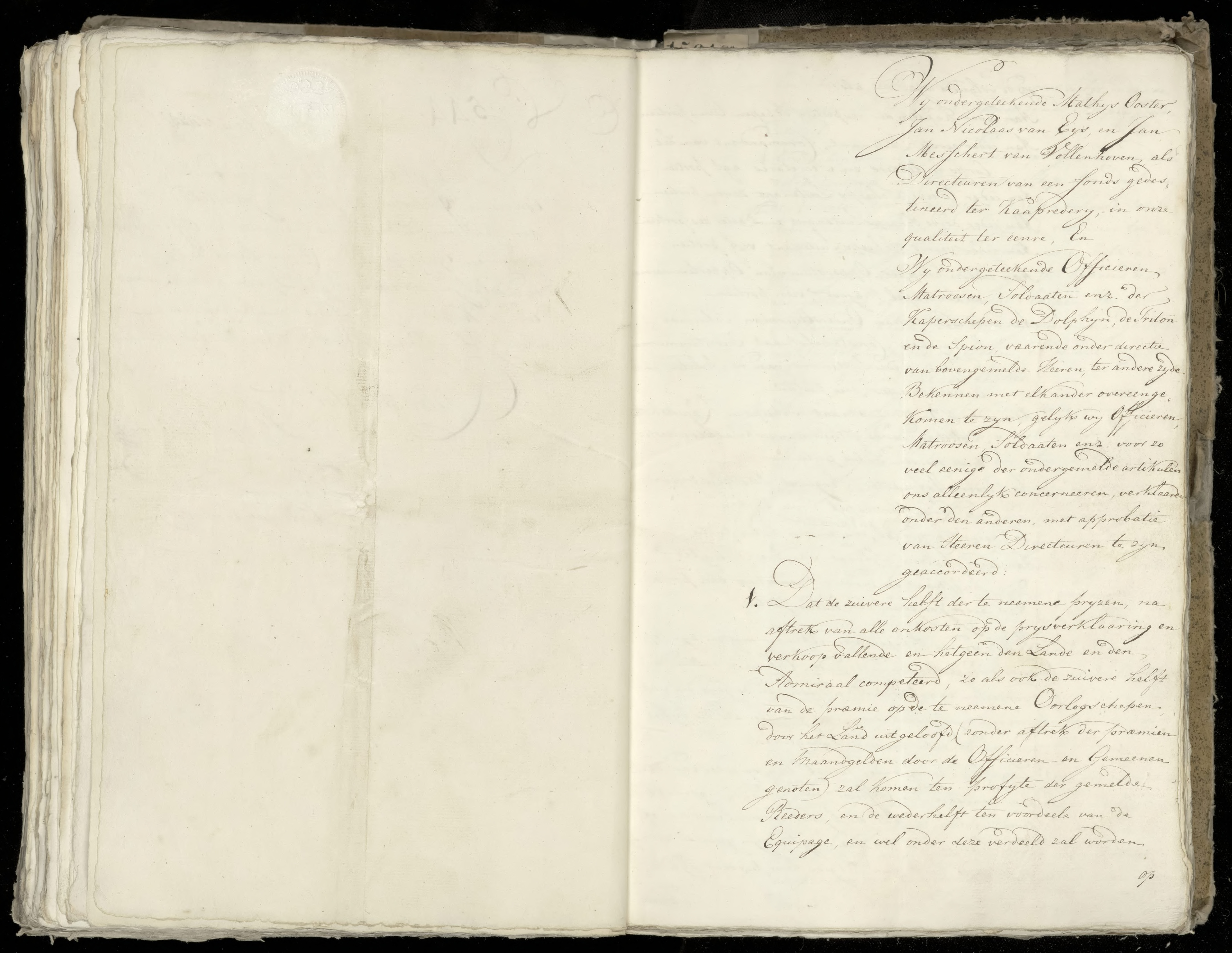
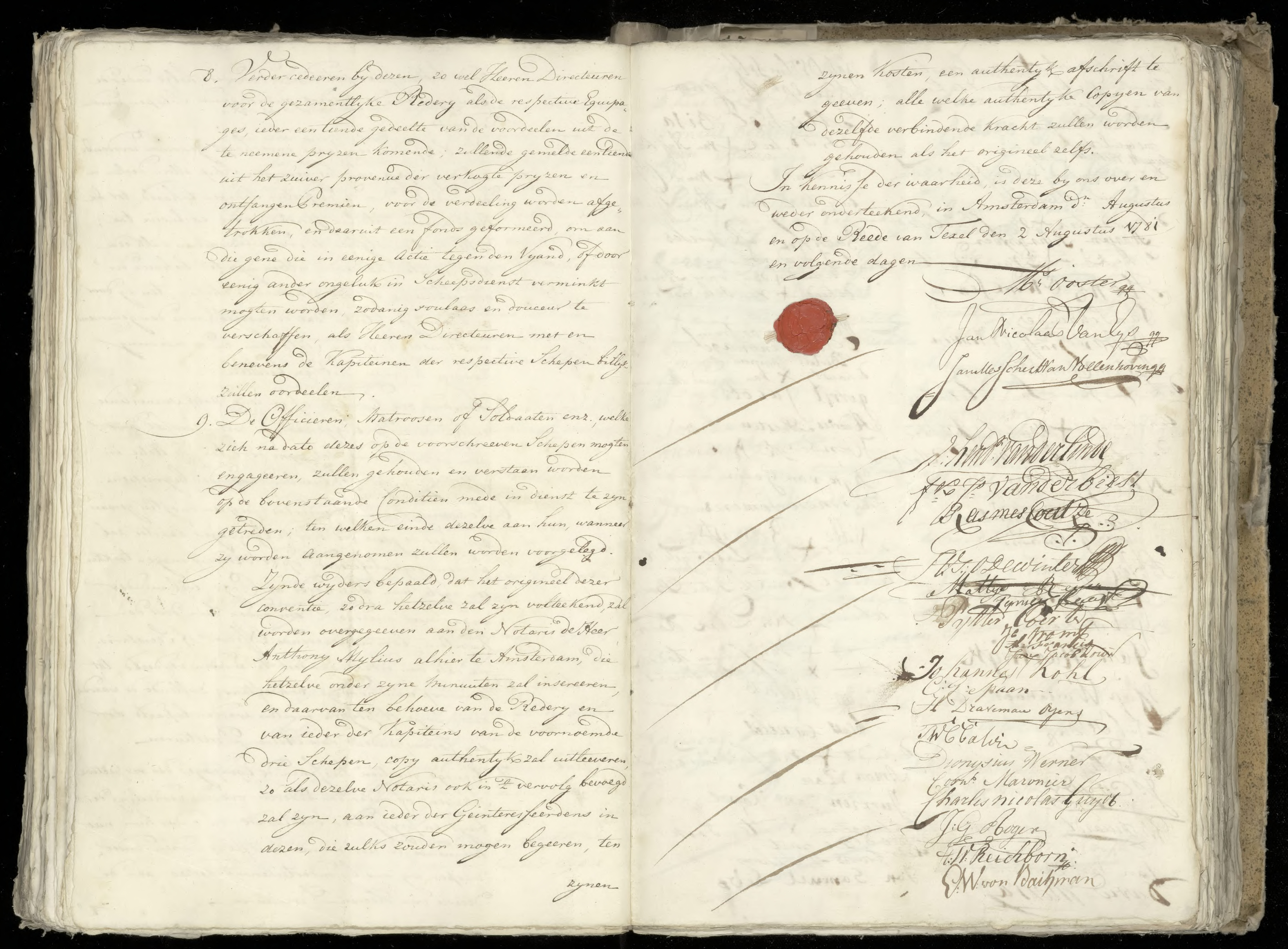
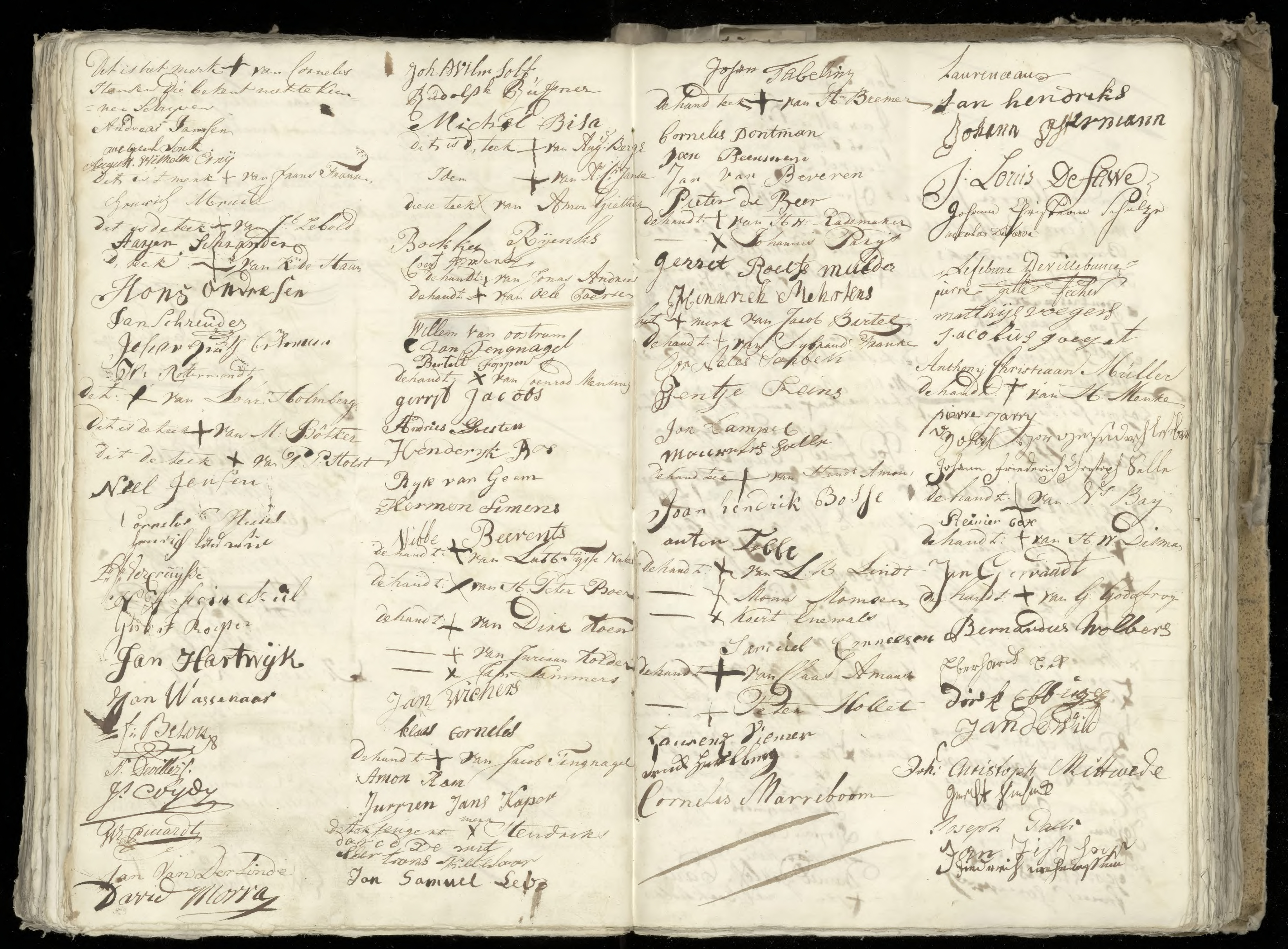
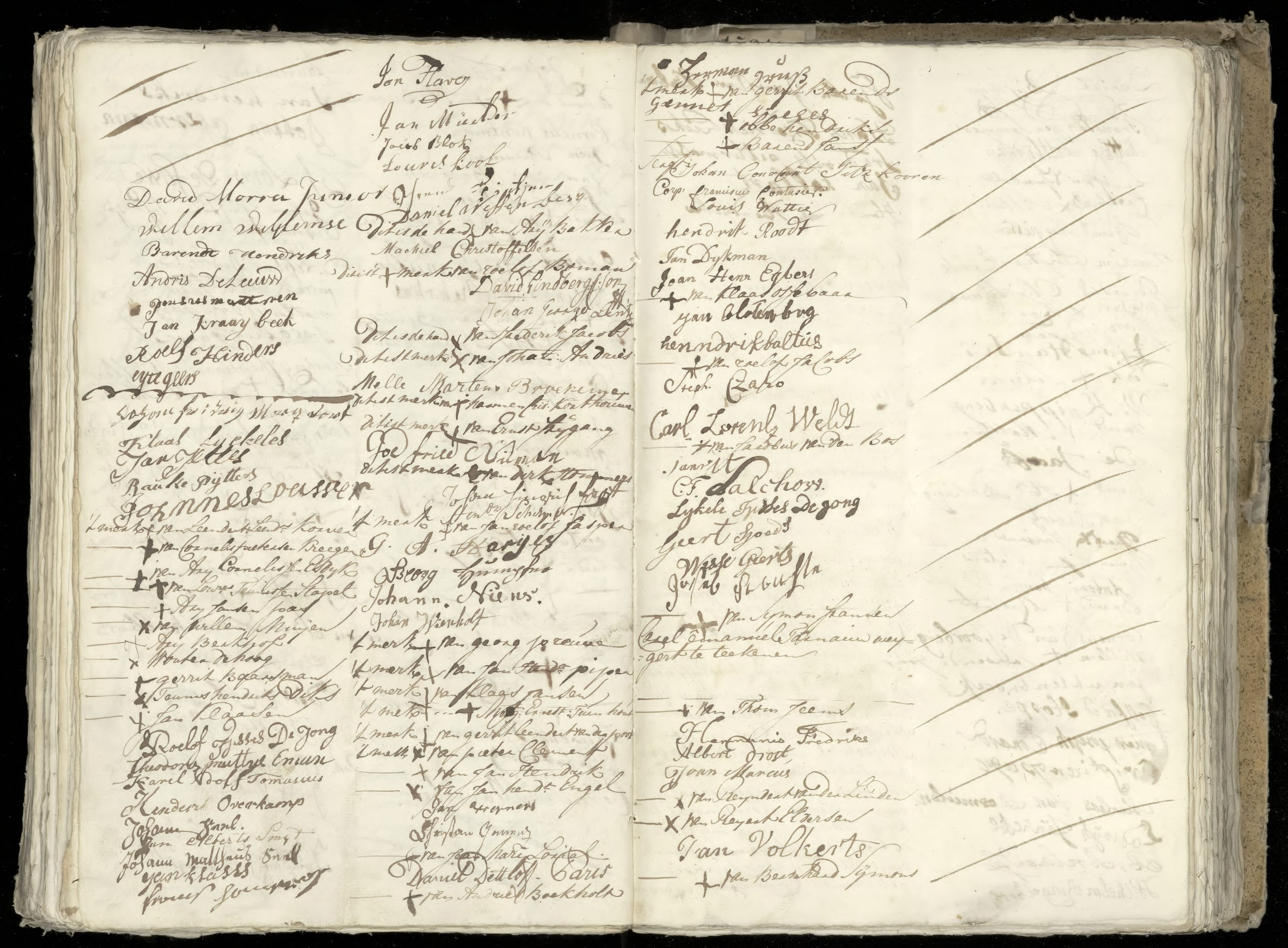
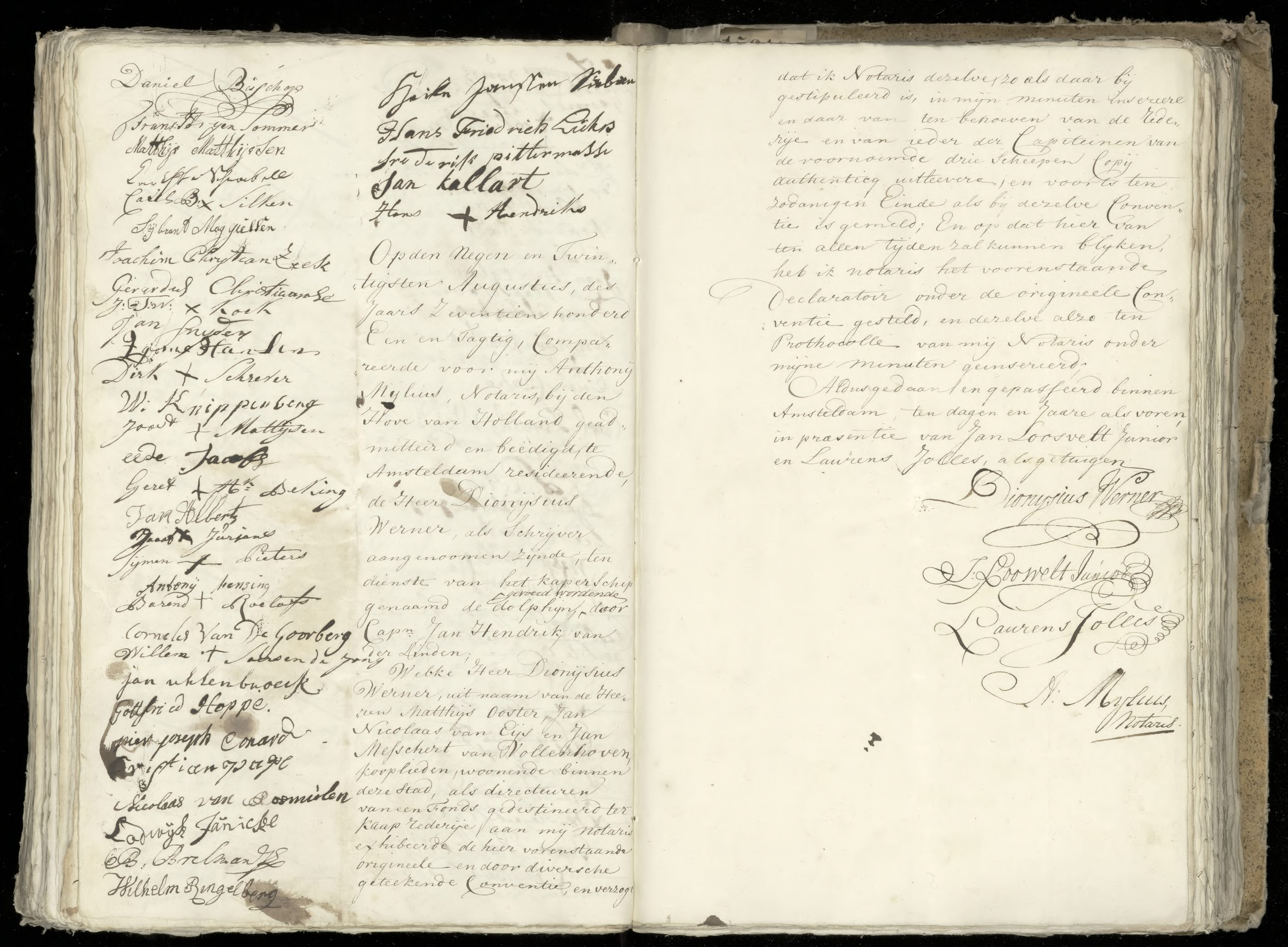
On 2 August 1781, a formal contract was concluded in Amsterdam regulating the distribution of future prize money (prijzen) earned by the privateering ships De Dolphijn, De Triton, and De Spion. Acting on behalf of a fund dedicated to privateering (fonds gedestineerd ter kaaprederij), the directors Matthijs Ooster, Jan Nicolaas van Eys, and Jan Messchert van Vollenhoven reached an agreement with the officers, sailors, soldiers, and crew members serving aboard the three vessels.
The contract set out the terms under which any captured prizes would be divided between the directors and the crews. The agreement was first signed by the directors and the three captains at the directors’ office in Amsterdam, after which the remaining crew members were presented with the contract on 2 August 1781 while the ships lay at anchor on the Texel roadstead. On 29 August 1781, the contract was formally entered into the notarial protocol at the request of Dionysius Werner, clerk aboard De Dolphijn.
Reference: Contract distribution of prize money