Springorum Families in Dortmund Area (1600–1750)
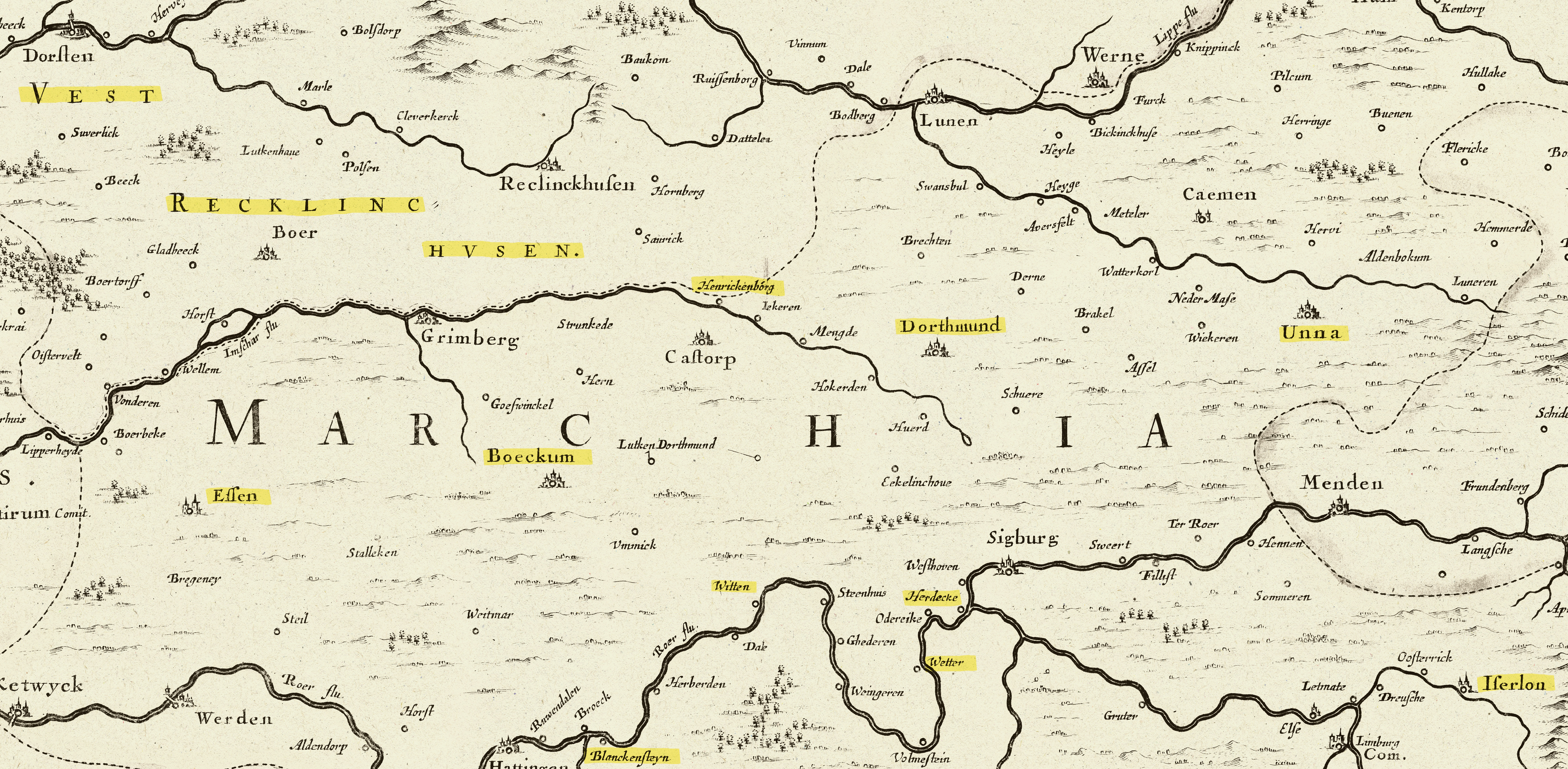
Dortmund and the Springorums in the 17th Century
This page traces the development of the Springorum family from the early seventeenth century onward, when the name becomes firmly established in Dortmund and the surrounding Ruhr area. From this period, surviving parish, civic, and judicial records allow the family to be followed with increasing clarity across successive generations.
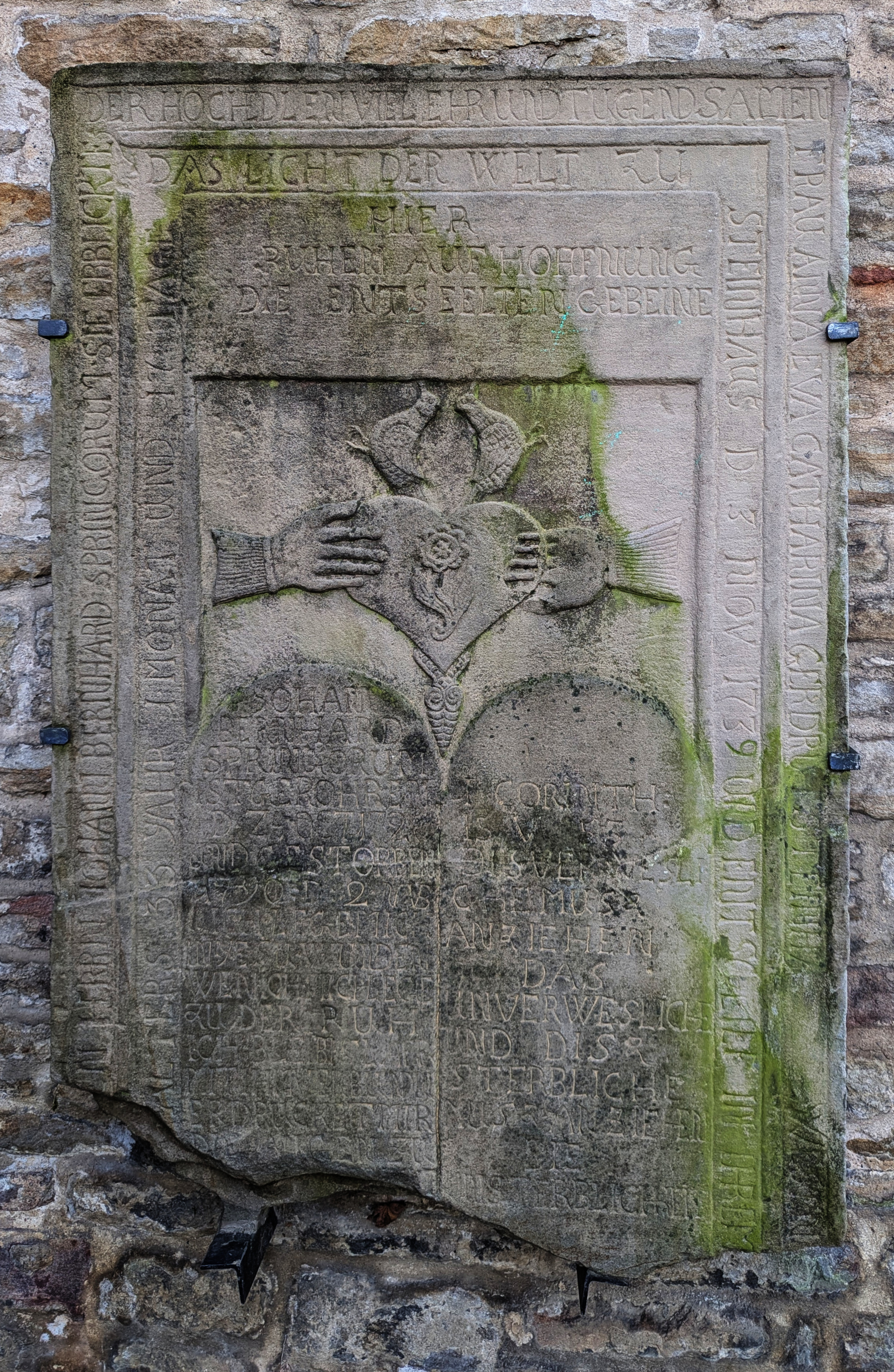
While earlier Springorum references in Bochum remain fragmentary, the appearance of Reinhard Springorum marks the beginning of a continuous and documentable line of descent. This section examines how that lineage takes shape within a broader regional context, in which multiple related family branches operated and where connections can be assessed with far greater confidence than in the preceding period.
Brief Historical Overview: Dortmund 1600–1750
At the beginning of the seventeenth century, Dortmund was an imperial free city (Freie Reichsstadt) whose political autonomy contrasted with its declining economic importance. Once a major Hanseatic center, the city had lost much of its long-distance trade by 1600, yet it retained strong administrative, legal, and ecclesiastical institutions. These provided precisely the kind of documentary environment in which families like the Springorums become visible and traceable.
War and Hardship
The Thirty Years’ War (1618–1648) cast a long shadow over Dortmund. Although the city avoided complete destruction, it endured occupation, troop billeting, rising taxation, famine, and repeated outbreaks of disease. Population numbers fell sharply, and economic life stagnated. Despite these pressures, municipal administration and parish life continued to function—leaving behind records that document the presence and continuity of the Springorum family during these difficult decades.
Stability and Transition
From the later seventeenth century into the early eighteenth century, Dortmund experienced a slow and uneven recovery. Civic structures stabilized, parish registers became more consistent, and legal documentation grew more systematic. Through these sources, successive generations of the Springorum family can be followed with confidence, from Reinhard onward to the generation of Barend and Willem Springorum. Their lives mark both the culmination of the Dortmund period and the transition toward the family’s later history beyond Westphalia.
Expanding from Dortmund: A Consolidated Pedigree
Generation 0
With the arrival of Reinhard Springorum in the early seventeenth century, the picture sharpens considerably: from this point onward, the line of descent becomes continuous, well documented, and traceable without significant gaps.
Reinhard (Reinhard) Springorum (1593 – 1666)
Generation 1
Pastor Johannes Springorum settled in Kirchende, from where many of his children later moved on to nearby towns.
Johannes Springorum (1625 – 1694)
Generation 2
The greatest challenge was establishing the connection between Johann Heinrich and Reinhard. The DNA match demonstrated that such a connection must exist. A family tree (Stammbaum) had already suggested Johann Heinrich as a son of Pastor Johannes, but it was the work of Dr. Höfken that ultimately provided the convincing documentary evidence.
Johann Heinrich Springorum (c. 1665 – ?)
A single baptismal record from St. Lambertus Church in Henrichenburg, in which Johann Heinrich and his wife appear as grandparents and godparents, provides the only firm evidence linking him to his son Johann Joseph and to later generations, including the Amsterdam branch of the family. This isolated yet decisive record makes Johann Heinrich a crucial connecting figure between the Reinhard Springorum lineage and its later descendants.
Generation 3
Very little is known about Johann Joseph.
Johannes Josephus (Joseph) Springorum (1711 – 1795)
Generation 4
The baptism record of Barend Springorum is unambiguous. Johann Heinrich and Helena Herdinck are identified as the grandparents of Barend and his brother Willem, who both moved to Amsterdam at a young age—and with that step, a new branch of the family took shape in a new world: Amsterdam.
Josephus Bernhardus Hendricus (Barend) Springorum (1742 – 1787)
In het begin van de jaren 1780 wendde hij zich tot de kaapvaart en trad hij op als kaapbaas van het schip De Spion tijdens de Vierde Engelse Oorlog. Zijn privéleven werd gekenmerkt door herhaald verlies: zijn kinderen overleden jong of verdwijnen uit de bronnen. Zwaar ziek stelde Barend in december 1786 samen met zijn vrouw Willemina een gezamenlijk testament op; kort daarna, in januari 1787, overleed hij.
Joan Wilhelm (Willem) Springorum (1744 – ?)
From Regional Continuity to Urban Settlement
By the mid-eighteenth century, this documented Westphalian lineage reaches a turning point, as members of the Springorum family leave the Ruhr area and establish a lasting new branch in Amsterdam.